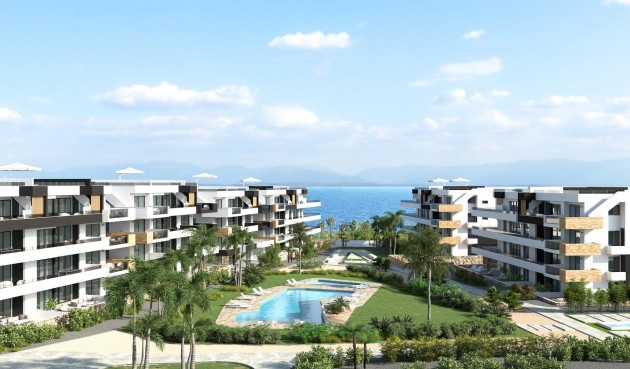
Bonavida Spain
1 LEGAL ASPECTS1.1 Private ContractWhen
you decide to buy a certain property, it is important to have a private contract
signed. On signing the contract, it is customary to pay a reservation deposit
of 3,000 euros. The contract defines the method of payment, the takeover date,
and the date for signing the Title Deed.Note: The
registration of the new Title Deed automatically invalidates the old one.If
you are buying a resale property, you are normally expected to pay the balance,
sign the Title Deed, and take the property over in no more than 8 weeks. In many
cases, vendors expect the deposit to be more substantial, say, 10% of the agreed
price. Alternatively, a lesser initial reservation deposit should be supplemented
with an additional payment of this magnitude as soon as possible.If
you are buying a new property from a builder or a promotor, the following method
of payment is usual:– One month after the signing
of the private contract, 50% of the purchase price plus the corresponding VAT
is transferred to the builder's bank account in Spain– Another
20% 25% stage payment plus the corresponding VAT may be due half way between
the 50% stage and completion– The balance plus
the rest of the VAT—minus the reservation deposit—is payable on completion.
In order to protect your investment, you can request the
builder to issue a bank guarantee for each of the amounts you have paid. 1.2 NotaryTo legalise the property
sale and purchase operation, both the Vendor and the Buyer must appear before
a Spanish Notary, whose job it is to act as an impartial witness of the transaction
and ensure that:– The identity of each party
is verified from valid ID documents– The details
of the property are correct– The parties are
in agreement over the price– There are no debts
or encumbrances on the property or, if there are, the parties are in agreement
over them.The current state of the property with regard
to possible mortgages, debts, embargos, and other encumbrances is certified by
the local Property Registry.Note: The Notary will
not sign the Title Deed, unless the state of debts and encumbrances has been clarified
by means of a fax sent by the Registrar in response to the Notary's official request.Once
registered in the Property Registry, the Title Deed is sent back to the Notary's
office, where it is archived. You get a First Copy of this public document. This
process normally takes a few weeks.1.3 ProxiesIf either of the parties is unable to appear before the Spanish
Notary on the agreed day, they can be represented by proxies. A person appearing
as a proxy needs a Spanish Power of Attorney.1.4 InterpreterIf either of the parties is not fluent enough in Spanish in order
to fully understand the proceedings, then the Notary requires an interpreter to
give a reading of the Title Deed in the native language of that party.1.5 Purchase-Related TaxesA number
of local and state taxes are levied on the property transfer. These taxes are
based on the price of the property. They are– Value-Added
Tax (IVA), currently 7% of the value declared in the Title Deed (new dwellings
only). Levied by the Government. Note: VAT for business properties is counted
at 16%.– Capital Transfer Tax and Stamp Duty
(ITPAJD), either 1% of the declared value (new dwellings only) or 7% of the declared
value (resales only). Levied by the Government. Note: In some Autonomous Regions
these percentages are currently 0.5% and 6%, respectively.– Tax
on the Rise of the Value of Land ("Plusvalía"), based on the
increase between the previous purchase price and the present sales price. Levied
by the local Town Council.If the vendor is non-resident,
then the buyer has the obligation to withhold 5% of the declared price and pay
this amount to the Government Tax Agency as an advance for the taxation of the
vendor's capital gains. The Government Form (Modelo) to be used for this payment
is number 211. The vendor can solicit the refunding of this money using form number
212.2 MORTGAGESYou can finance
part of the property purchase with a Spanish mortgage. The paperwork should be
sorted out with the bank well in advance of completion. Provided that the property
is surveyable (that is, in existence), the application procedure can be completed
in just a week or so.Non-residents can expect to finance
up to 50% 70% of a dwelling, or up to 50% of a business unit, with a Spanish
mortgage.3 TAXATION OF NON-RESIDENTS3.1 General
ObligationsIf your fiscal status in Spain is non-resident
and you own an urban property here, you are liable to Income Tax and Property
Tax, and to Real Estate Tax ("local rates").3.1.1 Fiscal
RepresentationIt is important to make sure that all your
taxes in Spain are paid within the established legal periods and in an acceptable
manner. You are therefore recommended to appoint a professional Fiscal Representative.
The annual cost of this service is typically around 100 € per person.3.1.2 Fiscal Identification NumberEvery
person who owns a property in Spain must have a Fiscal Identification Number for
the annual tax returns and any other correspondence with the Spanish Tax Administration.
In the case of Spanish nationals, this number is the same as the number on their
National Identification Document (DNI). The equivalent for foreigners is the Foreigners'
Identification Number (NIE), obtained from the General Directorate of the Police.
However, EU and EES citizens are not obliged to acquire a Foreigners' Identification
Number and may ask the Spanish Tax Authority to assign them a Fiscal Identification
Number instead.3.1.3 Who Is a Tax Payer?When
a property is owned by a married couple or by various individuals, each one is
defined as an independent tax payer. This means that each co-owner must file a
separate tax return..2 Individual Income TaxIn
the case of a property used by the owner(s) as a personal dwelling without rental
income, liability for Income Tax takes effect once a year, on December 31st.3.3 Property TaxNon-resident nationals
are required to file a return for Property Tax on real estate owned in Spain each
year on December 31st, regardless of the value of the property.An
urban property must declared in the return using the highest of the following
values:– Taxable value ("Valor catastral"),
from the Real Estate Tax (IBI) receipt– The
purchase price, from the Title Deed– The value
given by the dministration, based on an evaluation carried out for tax purposes.Provided
that there are no outstanding debts or arrears on the property, this value is
the base amount used for tax assessment. The tax due is calulated by applying
the current tax scale to the base amount.3.4 Real
Estate Tax or "Local Rates"The Real Estate Tax
(IBI) becomes payable to the Town Council once a year. The amount is typically
in the order of 100 to 200 euros, depending on the location, quality, size and
age of your property.As owner, it is your obligation to
pay the local rates, even if you have received no invoice. In other words, you
yourself are responsible for finding out the exact amount payable and making the
payment within the legal collecting period. This varies by municipality, but is
usually around September to November.Penalty on arrears
can be up to 20%. Prolonged non-payment can result in legal proceedings and, in
the worst case, an embargo on your assets and selling of property through a public
auction.It is a good idea to have a standing order in
your bank for the payment of this tax. Having a professional Fiscal Representative
(see 3.1.1) control this paperwork can give you extra peace of mind.4 CAPITAL
GAINS TAX ON SELLING YOUR PROPERTYCapital gains resulting
from sales of properties are taxable. The amount of capital gains is determined
by subtracting your original purchase value from your obtained net selling value.4.1 Taxable AmountTo determine the
net selling value, you deduct from the selling price your expenses and taxes.
The difference between the net selling value and the original purchase value is
the taxable amount. The tax rate is 35%.4.2 The 5%
RuleIf you are non-resident, then the buyer has the obligation
to withhold 5% of the declared price and pay this amount to the Government Tax
Agency as an advance for the taxation of your capital gains. See also 1.5.4.3 Refund of Excess WithheldThe
5% withheld is often in excess. You then have the right to a refund, but it must
be solicited using form number 212 (see 1.5). The Government Tax Agency will pay
the refund either by means of a cheque, or a transfer to the bank account you
define. The account holder must be either you or your representative whose powers
must be officially confirmed before a Notary.4.4 Provisional
SettlementThe Tax Administration has the obligation to
carry out a provisional settlement within six months following the deadline established
for the filing period. Should they fail to do this, they must refund the excess
resulting from your own assessment. Once six months have passed, the Tax Administration
is liable to pay interest on your outstanding claim.5 SPANISH
WILLSIf you have made a Last Will and Testament in your
own country, it will stand up in Spain on your demise. However, there would be
quite a few inconveniences, translation costs, and other expenses ahead, so it
is a good idea to go to a Spanish Notary and sign a generic Will governing all
your property in Spain.All Spanish wills are registered
centrally in Madrid. Upon the death of the testator, the Registry of Wills will
issue a certificate of the contents of the will and, if necessary, procure the
transfer of the assets to the inheritors. 6 INHERITANCE
TAX6.1 Inheritance Acceptance DeedOn
the execution of a will, the heirs must sign an Inheritance Acceptance Deed before
the Notary. This document states the deceased person's all assets in Spain (real
estate, cars, jewelry, etc.).6.2 Payment of Inheritance
TaxThe legal period to pay the Inheritance Tax is six
months from the signing of the Inheritance Acceptance Deed. The heirs pay their
taxes on a pro rata basis.6.3 Tax BaseSpanish
Inheritance Tax is levied on a progressive scale from 7.65% to 34%. The percentage
is applied on each heir's received capital gain, discounting the liabilities.6.4 ReductionsYou need to be aware
of the following tax reductions:– Close heirs
(spouses, ancestors, children, and adopted children) over 21 years of age have
tax exemption up to 16,000 €– More distant
heirs have no tax exemption at all– Close heirs
(spouses, ancestors, children, and adopted children) who are beneficiaries of
the deceased person's life insurance can count on a 100% tax reduction on received
life insurance